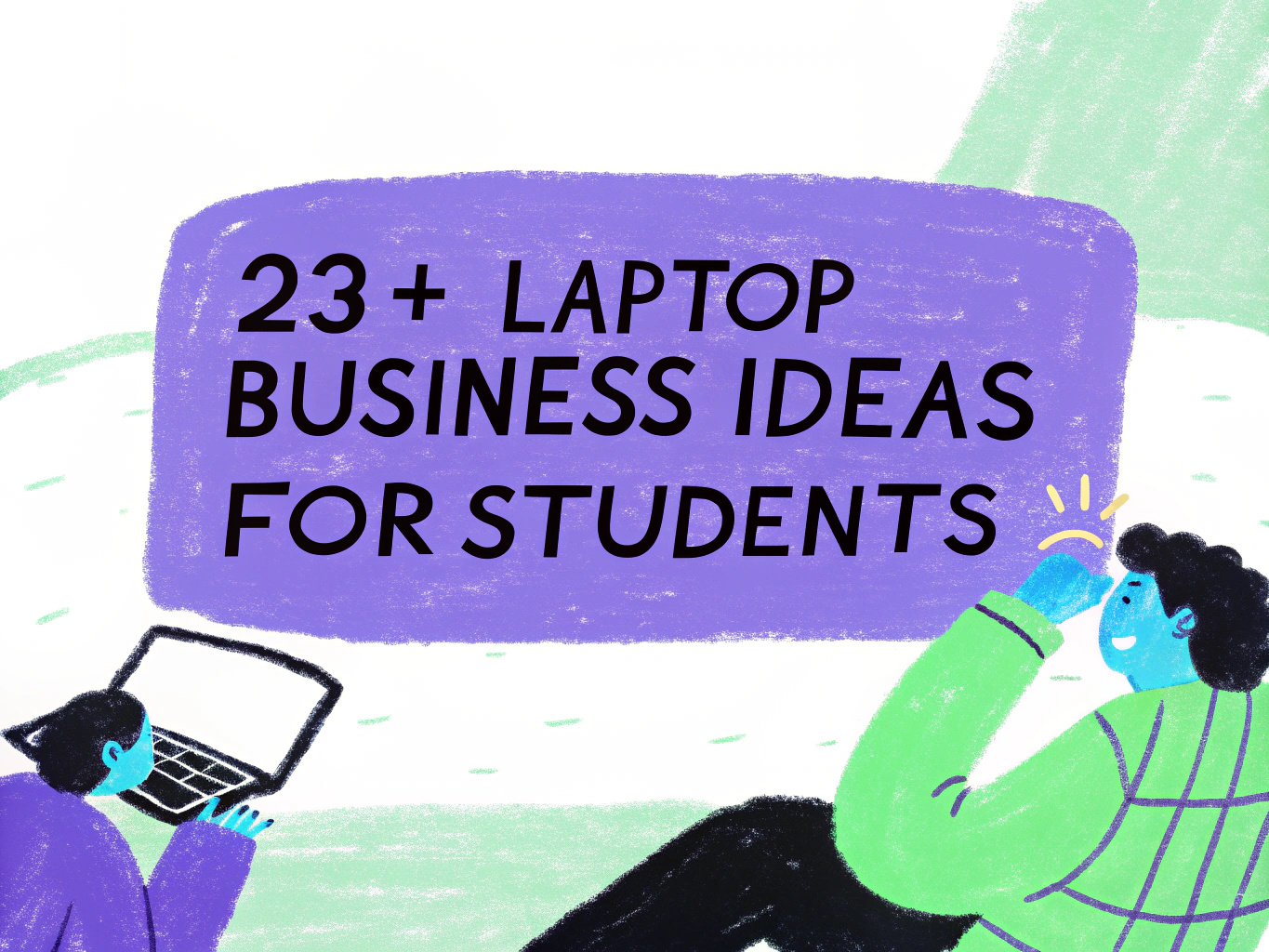
23+ Laptop Business Ideas for Students
A laptop business is different from every other student income option and the difference matters. A campus job pays by the hour and stops when you stop. A laptop business pays whether you are in class, sleeping, or backpacking through another country during break. The work you do on a Tuesday afternoon can still be earning money the following November.
What sets 2026 apart is the sheer accessibility of this. A student with nothing more than a laptop, a skill, and a clear niche can launch a service, build a product store, or grow a content channel that generates real income before graduation. The global e-learning market alone is projected to reach nearly $400 billion this year. Ad spending on social platforms is growing 10.9% per year through 2030. These are not abstract statistics — they are the markets you are entering right now.
This guide covers 23+ laptop business ideas for students with honest income ranges, real startup costs, and one recurring principle that separates the businesses that actually build something from the ones that generate temporary income and stop.
The One Rule That Applies to Every Business on This List
Every business here follows the same fundamental principle. Build something that compounds.
A campus job earns a fixed hourly rate forever. A laptop business can compound — more clients lead to better reviews lead to higher rates. More digital product listings lead to more search visibility lead to more passive sales. A content channel with 50 videos earns more than a channel with 5 because every video is a permanent search entry point.
The practical implication: Prioritize businesses where the work you do today keeps working for you tomorrow. That distinction is what separates a laptop income from a laptop business.
Writing and Content Businesses
1. Freelance Writing
Startup cost: $0
Income: $10 to $30 per hour for beginners. Higher for niche specialists.
Freelance writing search interest spiked 5,546% last year — the highest growth rate of any tracked side hustle category. Demand is real, growing, and specifically driven by businesses needing human-written content that reads naturally and ranks in search.
What clients pay for:
- Blog posts and SEO articles for small business websites
- Product descriptions for ecommerce stores
- Website copy and homepage content
- Monthly social media caption packages
How to get started without prior clients:
- Write three sample articles in one specific niche
- Publish them on a free Medium account
- Reach out to five businesses in that niche with your samples
Specializing in one niche earns dramatically more than general writing. A student who writes specifically about personal finance, health tech, or SaaS products commands rates that generic “I write everything” writers never reach.
2. Copywriting
Startup cost: $0
Income: $15 to $25 per piece for beginners. Experienced copywriters earn $50 to $200 per page.
Copywriting means writing words designed to persuade rather than just inform — sales pages, email sequences, ad copy, and product launch content. The output has direct revenue impact for the client, which is why it pays significantly more than general content writing.
Best starting niches for students:
- Email welcome sequences for small online businesses
- Product page rewrites for Etsy sellers
- Instagram bio and caption optimization for local businesses
3. Proofreading and Editing
Startup cost: $0
Income: $15 to $25 per hour for beginners.
As AI-generated content floods the internet in 2026, demand for human editors who catch subtle errors and improve readability is growing specifically among quality-focused publishers and small businesses.
Requirements: Strong grammar, genuine attention to detail. No design or technical skill needed.
Getting first clients: Offer to proofread a classmate’s essay or a small business’s website copy for free. One genuine testimonial from a real person converts future clients at a much higher rate than a blank profile.
4. Niche Blogging with Affiliate Income
Startup cost: $0 on free platforms. Around $15 per year for a custom domain.
Income: Modest in months one to six. Potentially $500 to $3,000 per month once articles rank in Google search.
A niche blog built around a specific topic generates income through affiliate commissions and display advertising once it ranks. Once the content library is built and indexed, income from existing articles requires no ongoing active work.
What makes a blog compound:
- Publishing 20 to 30 focused articles over several months
- Targeting specific long-tail search queries with clear buyer intent
- Earning affiliate commissions from products naturally mentioned in content
The investment is consistent writing over six to twelve months. The reward is a compounding asset that keeps earning indefinitely.
Design and Creative Businesses
5. Graphic Design Services
Startup cost: $0. Canva is free.
Income: $10 to $20 per hour at entry level. Ad spending on social platforms growing 10.9% per year through 2030 is driving consistent demand for social media graphic design specifically.
What clients pay for:
- Logo design for new small businesses and Etsy shops
- Social media graphics and brand kits
- Flyer and event promotion design
- YouTube thumbnails for content creators
Building your portfolio before your first client:
- Redesign an existing local business logo or social media presence
- Build three to five spec pieces in your target niche
- Post them in a simple free portfolio page or Behance profile
Platform note: Fiverr allows accounts from age 18 for independent use. Students under 18 need parental account involvement.
6. Video Editing
Startup cost: $0. CapCut and DaVinci Resolve are both free.
Income: $15 to $30 per short-form video at starting rates. Experienced editors earn $50 to $100 per video.
Short-form video editing is one of the highest-demand laptop-based services in 2026. Content creators, small businesses, and brands need consistent video content edited quickly and well.
What makes this compound:
- Each client project is a portfolio piece
- Recurring clients pay weekly without ongoing outreach
- Niche editorial knowledge grows with every project in that content space
First client strategy: Complete two free edits for small creators as portfolio samples. One weekly client generates consistent recurring income from a single relationship.
7. Print-on-Demand Store
Startup cost: $0. The platform handles all production and shipping.
Income: Depends entirely on niche and design quality. Established stores earn $200 to $2,000 or more per month.
Upload designs to platforms like Redbubble or Printify. The platform prints and ships everything. You earn a margin on every sale with no inventory or logistics management.
What works in 2026:
- Niche community stores rather than generic designs
- Back-to-school collections launched in late July for August demand
- Seasonal aesthetic collections aligned with trending visual styles
8. Digital Art and Illustration Sales
Startup cost: $0 on Redbubble. $13 for Procreate as a one-time purchase if using iPad.
Income: Passive per-download royalties that compound as your library grows.
Selling original digital artwork as prints, phone cases, stickers, and tote bags through platforms like Redbubble and Society6 requires no inventory management. A shop built around a specific illustration style or recurring visual universe builds a recognizable identity that followers return to.
Digital Product Businesses
9. Printable Template Shop
Startup cost: $0.20 per Etsy listing. Everything else is free.
Income: $5 to $25 per download. Consistent shops in specific niches earn $200 to $1,000 or more per month over time.
Study planners, productivity templates, budget worksheets, and journal pages are all products students understand from their own daily lives. That lived experience is a genuine design advantage.
What makes printables compound:
- Every listing is a permanent search entry point on Etsy
- Products sell passively without daily involvement once ranked
- One design can sell hundreds of times with zero additional production cost
Parental or adult account setup required for Etsy since the platform requires account holders to be 18.
10. Notion Templates
Startup cost: $0. Notion is completely free.
Income: Simple templates sell for $5 to $12. Comprehensive system bundles sell for $15 to $30.
Pre-built Notion workspaces sold on Gumroad or Etsy under a brand name require no face, no camera, and no ongoing work after the initial setup. The expertise comes from using Notion yourself daily.
Highest demand niches for student creators:
- Semester academic planning systems
- Freelancer client management dashboards
- Content creator planning and analytics systems
- ADHD productivity tools designed around low-friction habits
11. Digital Planner Business
Startup cost: $0. Google Slides and Canva are both free.
Income: Comprehensive digital planners sell for $12 to $35.
Hyperlinked digital planners built in Google Slides for use in GoodNotes generate passive income once listed. The August back-to-school window is the highest-demand period in the entire digital planner calendar — a detail students can specifically take advantage of.
12. Sell Study Notes and Flashcards
Startup cost: $0. The content comes from your own coursework.
Income: $5 to $25 per download. Top creators in niche subjects earn $200 to $1,000 or more per month.
This is the most natural digital product for a student because you are creating the content anyway. The product is a polished version of notes that already exist from your own studying.
What sells best:
- Subject-specific AP or IB class notes from courses you just completed
- SAT and ACT prep flashcard decks
- University-level subject summaries for common first and second-year courses
13. Short Ebook and Guide Store
Startup cost: $0. Google Docs and Canva are both free.
Income: $7 to $19 per download.
A 20 to 30 page PDF guide covering one specific topic sells passively on Gumroad or Etsy. Written in your own voice, covering something you have genuinely mastered or experienced, a focused guide earns indefinitely from a single afternoon of writing and design.
Social Media and Marketing Businesses
14. Social Media Management
Startup cost: $0
Income: $150 to $500 per month per client on retainer.
Most small local businesses need consistent social media presence but lack the time and knowledge to execute it. Students who grew up on these platforms understand them in a way most small business owners genuinely do not.
What a basic monthly retainer includes:
- 12 to 16 posts per month created and scheduled
- Caption writing and visual content sourcing
- Basic comment monitoring and engagement
- A simple monthly performance summary
First client strategy: Start with local businesses you already patronize. One warm introduction from a shared contact converts far better than a cold message to a stranger.
15. Affiliate Marketing Through Content
Startup cost: $0
Income: Commissions ranging from 5% to 50% per sale depending on the affiliate program.
Recommending products you genuinely use through a blog, YouTube channel, email newsletter, or niche social account earns commission income passively each time someone purchases through your link. Once the content is published and ranking or discovered, affiliate income from that content requires no additional work.
What makes this compound:
- Affiliate links in blog articles earn for years after the article is published
- YouTube video descriptions earn commissions from views months later
- Newsletter recommendations earn from every new subscriber who reads old issues
16. Pinterest Traffic Strategy
Startup cost: $0
Income: Indirect income through driving traffic to affiliate links, digital product listings, and content.
A Pinterest account built around a specific niche drives long-term passive traffic to Etsy listings, Gumroad products, or affiliate offers. Pinterest rewards content quality and keyword relevance rather than personal charisma or posting frequency. Well-made pins drive clicks for months or years after being published.
Teaching and Knowledge Businesses
17. Online Tutoring
Startup cost: $0. You already have the expertise.
Income: $15 to $50 per hour depending on subject and expertise. Tutoring search interest grew 1,011% last year.
Students consistently earning high grades in specific subjects have the most credible positioning for offering tutoring because the results are recent and verifiable.
Highest demand subjects right now:
- SAT and ACT preparation before fall testing dates
- AP class support across math, science, and humanities
- University-level calculus, chemistry, and statistics
- Foreign language conversational practice
What makes tutoring compound:
- Students refer friends when they see results
- Reputation in a school or community grows through word of mouth
- Popular tutors fill their schedule without any ongoing marketing
18. Online Course Creation
Startup cost: $0. Teachable offers a free plan.
Income: Courses priced $27 to $197 generate passive income from every new enrollment.
The global e-learning market is projected to reach nearly $400 billion in 2026. Students who have mastered a specific skill — a software tool, a study method, a creative process, a language — can package that knowledge into a short practical course.
What the best beginner courses have in common:
- Focused on one specific skill for one specific beginner
- Short enough to complete in one sitting — 60 to 90 minutes
- Immediately actionable with clear outcomes the buyer can achieve
The course is built once and earns from every future enrollment indefinitely.
19. Language Translation Services
Startup cost: $0
Income: $20 to $30 per hour for experienced translators.
Students who are natively bilingual have a genuinely premium skill that cannot be quickly learned or adequately replicated by automated translation for business-quality output. Native bilingual fluency with cultural nuance is worth more than most other entry-level laptop skills.
What clients need:
- Website and product description translation
- Social media content localization for regional markets
- Marketing material adaptation
- Short document translation for small businesses
Technical and Specialized Businesses
20. Basic Website Building
Startup cost: $0 for design tools. Around $15 to $30 for any domain registration if purchasing one for client use.
Income: $200 to $600 per site at beginner rates. Monthly maintenance retainers add $30 to $80 per month recurring.
Millions of small businesses have no website or one so outdated it damages rather than builds credibility. A student who builds clean professional five-page websites on Squarespace or Wix with no coding required delivers genuine business value at a price professional agencies would not consider quoting.
What a basic website package includes:
- Five pages covering home, about, services, portfolio or menu, and contact
- Mobile-responsive design on both phone and desktop
- Simple contact form and basic SEO setup across page titles
21. Podcast Editing
Startup cost: $0. Audacity and GarageBand are both free.
Income: $25 to $75 per episode.
Independent podcasters need consistent editing support and the entire workflow operates through file sharing with no face or video calls required. A clean audio edit, properly timed introduction and outro music, and export in the correct format is the complete deliverable.
22. AI Prompt Engineering and Consulting
Startup cost: $0
Income: $15 to $50 per hour for services. $5 to $20 per prompt pack for digital products.
Most people who use AI tools daily are not using them effectively. Students who have genuinely learned how to engineer clear, specific, and effective prompts for specific business use cases are offering a skill with real demand.
Service formats that work:
- Building customized prompt libraries for specific business workflows
- Training small business teams on effective AI tool usage
- Creating and selling prompt packs as digital products on Gumroad
23. Virtual Assistant Services
Startup cost: $0
Income: $18 per hour at entry level. Specialized VAs earn $25 to $40 per hour.
A virtual assistant helps online business owners with inbox management, scheduling, research, social media scheduling, and customer service responses. The work is entirely laptop-based, fully remote, and accessible to organized students who pay attention to detail.
Important positioning note for 2026: Focus on higher-judgment VA tasks like client communication, content research, and relationship management rather than mechanical data entry that automation is actively replacing. Specialized VAs who understand a specific industry or tool set earn premium rates compared to generalist VAs offering administrative support.
How to Pick the Right Laptop Business for Your Situation
Two questions narrow it down quickly.
Question 1: How fast do you need income?
Service businesses like freelance writing, graphic design, tutoring, and social media management generate first income within days of landing a first client. Digital product businesses take two to six weeks. Content and blog businesses take six to twelve months.
Question 2: Do you want active or passive income?
Active income comes from direct service work — you work, you get paid, you stop working and payment stops. Passive income comes from digital products, affiliate content, and courses that earn while you study. The most financially intelligent laptop business combines both: active service work covering current expenses while passive income foundations are built in parallel.
A practical student structure that works:
- 5 to 10 hours per week on one active service business
- 2 to 4 hours per week building one passive income foundation
- Review results after 90 days and double down on whichever is generating traction
Frequently Asked Questions
Do students need to register a formal business to run a laptop business?
Most students start as informal sole proprietors without formal registration. Legal registration becomes relevant as income grows to a level where formalization provides tax advantages or business credibility benefits. Involve a parent or financial advisor in that decision when income becomes consistent.
How much can a student realistically earn from a laptop business?
Realistic early expectations for most laptop businesses are $200 to $800 per month within the first two to three months of consistent effort. Students who build real skill in a specific niche, deliver excellent client work, and treat the business seriously often reach $1,000 to $3,000 per month within six to twelve months. The ceiling beyond that exists only in the form of time available.
Can a laptop business hurt academic performance?
It does not have to and it should not. The businesses on this list are specifically chosen because they fit around a flexible student schedule rather than demanding fixed hours. The rule worth setting from the start: schedule business work around your classes and study commitments, never the other way around. A laptop business that hurts your grades is not a good trade regardless of how much it earns.
Which laptop business is most valuable on a resume or graduate school application?
Businesses that demonstrate client management, project delivery, and measurable results are the most compelling. Social media management with documented growth metrics, freelance writing with published portfolio pieces, tutoring with student outcome testimonials, and website building with live client examples all translate directly into professional credibility that generic part-time jobs do not.
Final Thoughts
A student with a laptop and a genuine skill has everything needed to build a real business in 2026. Not a side hustle that earns during the semester and stops during exams. A business that compounds — where the clients you serve today refer you to new clients, where the products you build today sell passively for years, where the content you create today ranks in search indefinitely.
That compounding is what separates a laptop business from every other student income option. And it is completely available to any student willing to pick one thing, build it seriously, and show up consistently for longer than feels comfortable at the start.
Pick one business from this list. Take one concrete action toward it this week. The difference between the students who build something real and the ones who read about it and wait is nothing more than that first action.

- 21+ Print on Demand Ideas for Beginners - March 29, 2026
- 18+ AI Affiliate Marketing Ideas - March 27, 2026
- 29+ Passive Faceless Income Ideas - March 27, 2026