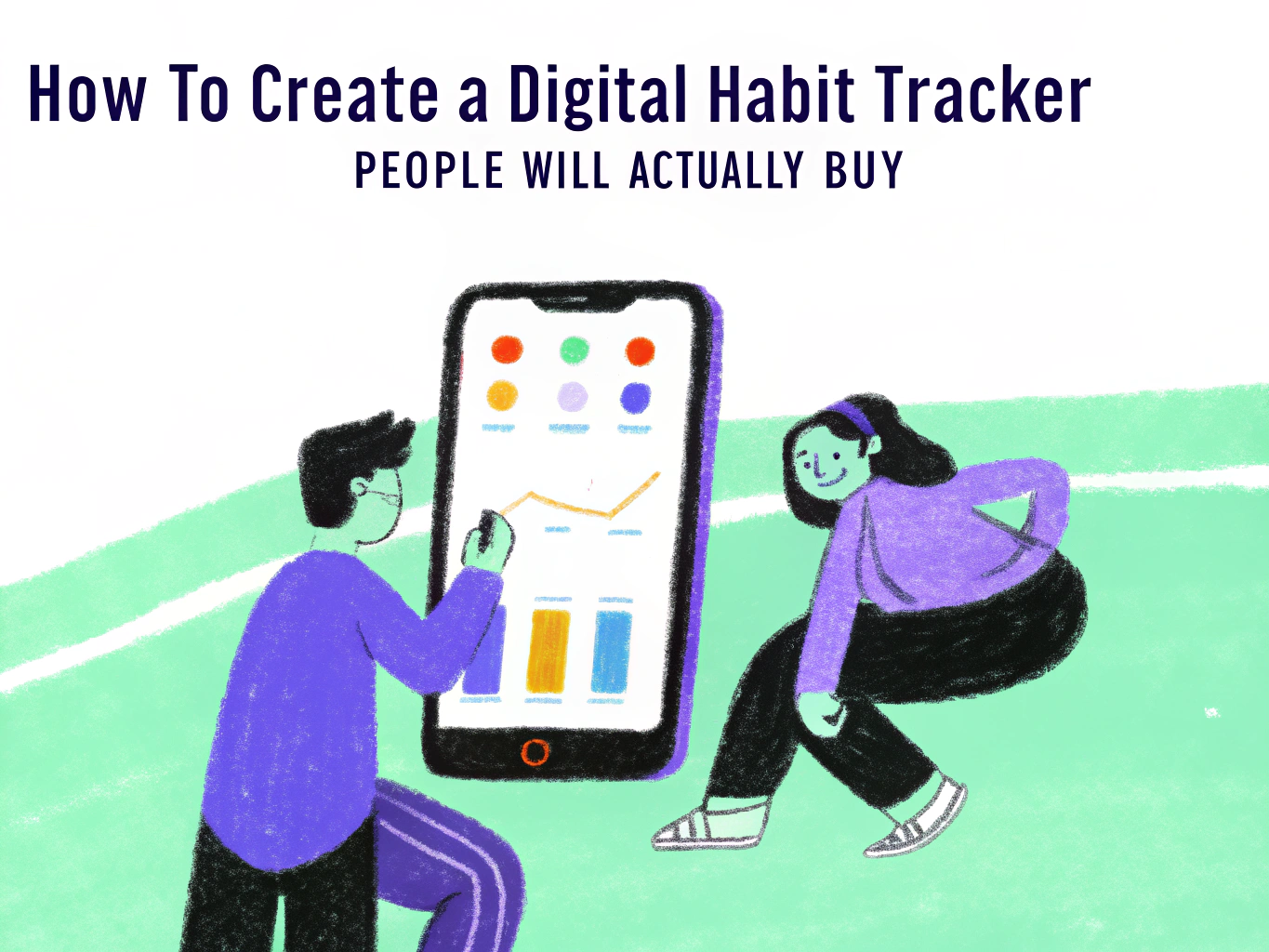
How to Create a Digital Habit Tracker People Will Actually Buy
There are over 5,000 habit tracker listings on Etsy right now. Most of them look nearly identical like a grid of boxes, some light pastel colors, a monthly layout. Most of them are also not selling particularly well. The ones that are generating consistent reviews and repeat buyers are doing something different and it is not just about aesthetics.
This guide covers how to create a digital habit tracker that people will actually buy and more importantly actually use, which is the detail that generates five-star reviews and word-of-mouth sales.
Why Most Habit Trackers Fail Their Buyers and What That Means for You
Before designing anything, understanding the psychology of habit tracking gives you a genuine product design advantage over every seller who just opens Canva and makes a grid.
Research published in the European Journal of Social Psychology found that habit formation takes an average of 66 days, not 21 days as is commonly believed and repeated everywhere. Most habit trackers are designed around 21 or 30-day cycles, which means buyers who are still building their habits at day 35 feel like they have already failed. That experience does not generate a five-star review.
Psychology Today’s analysis of habit tracker research found that trackers work not because they look pretty but because they leverage three specific psychological mechanisms — self-monitoring, reduced cognitive load by offloading intentions from working memory, and identity reinforcement, which is the process of seeing daily evidence that you are becoming the person you want to be.
The same research flagged a critical design problem with most trackers. They demand perfectionism. A streak-based tracker that visually highlights every missed day creates guilt and anxiety rather than motivation, and buyers who feel guilty using your product do not finish it, do not leave reviews, and do not buy from you again.
The practical design conclusion from all of this is straightforward. A habit tracker built around realistic timelines, flexible miss-without-guilt structures, and identity-focused framing will consistently outperform a generic monthly grid regardless of how beautiful the grid looks. Targeted solutions consistently outperform generic templates and a habit tracker designed around real human psychology is more targeted than one designed around the most common visual convention.
The Three Types of Habit Tracker Products Worth Building
Before opening any design tool, decide which format you are building because each attracts a different buyer and requires different file types.
The first is a printable habit tracker PDF. This is a static, designed file the buyer downloads, prints on standard paper, and writes on by hand. Research consistently shows that handwriting activates brain regions associated with learning and memory in ways that typing does not, which means paper-based tracking genuinely works better for some people. Buyers who prefer analog systems actively search for printable options and are a large and consistent purchasing group on Etsy.
The second is a digital planner habit tracker PNG or PDF designed for use in GoodNotes, Notability, or Noteshelf on iPad. The buyer imports the file into their annotation app and writes on it with a stylus. This format appeals to the large and growing digital planning community and can be sold as part of a broader digital planner bundle or as a standalone product.
The third is a spreadsheet-based habit tracker built in Google Sheets or Excel. This format appeals to data-oriented buyers who want to see charts, percentages, and completion rates alongside their daily check-ins. A well-built Google Sheets habit tracker with automatic completion rate calculations and a visual progress chart sells at a higher price point than a simple printable and appeals to a buyer who is motivated by metrics and data rather than aesthetics.
For a beginner first product, the printable PDF is the fastest to build and the most broadly accessible. For a seller who already has some experience with spreadsheet formulas, the Google Sheets tracker is a strong differentiator in a market where most products are purely visual.
Step 1: Choose Your Niche and Buyer Before You Design Anything
A generic 30-habit monthly tracker competes with thousands of identical listings. A habit tracker specifically designed for one type of person with one specific set of goals competes with almost nothing.
The buyers who purchase habit trackers are not a homogeneous group. The person trying to build a consistent fitness routine has completely different habit categories from the person managing a chronic illness, building a creative practice, running a small business, or working through an ADHD management system. Each of these buyers would choose a tracker designed specifically for their situation over a generic one every single time.
Look at what is actually selling. Search habit tracker on Etsy and filter by Top Reviews. Read the listing descriptions and the actual buyer reviews of the top sellers. The reviews are where you find what buyers loved and what they wished was different. Gaps in what buyers wished was different are product opportunities.
The niches with genuine unmet demand for habit trackers right now include ADHD-specific habit systems designed around low friction and forgiveness rather than streaks, chronic illness and symptom management trackers that combine habits with energy levels and symptom notes, sobriety and recovery trackers designed with sensitivity and specific relevant habit categories, perimenopause and women’s health trackers that combine habits with cycle tracking and symptom logging, small business owner routine trackers combining personal habits with business tasks, and creative practice trackers for writers, artists, and musicians who want to track creative output consistently.
Pick one specific buyer. Design everything that follows with only that person in mind.
Step 2: Decide on Your Tracker Structure Based on Real Habit Science
The structure of your tracker is a product design decision, not just a visual design decision. The structure determines whether buyers actually use it and whether they finish it feeling successful or feeling guilty.
Build your tracker around a 60 to 66 day cycle rather than 30 days wherever possible. Buyers who understand that habits realistically take two months to form will appreciate a tracker that reflects that timeline and will use it longer before abandoning it.
Include a missed day recovery section or a explicit design choice that makes missing days visually neutral rather than visually jarring. One practical approach is using a dot or small circle to mark completed days rather than a chain streak system where any missed day visually breaks the chain. A completion dot for days you showed up feels encouraging. A broken chain for days you missed feels punishing.
Limit the number of trackable habits per page. Research consistently shows that people who try to track more than five to eight habits simultaneously are significantly less successful than those who focus on a smaller number. A tracker that provides space for three to five habits with substantial reflection space for each is more genuinely useful than one that provides 15 habit rows with no reflection space. Buyers who are successful with your product come back and buy more of it.
Include a weekly or monthly reflection prompt at the end of each tracking period. A simple question like “What worked this month?” and “What one habit do I want to focus on next month?” transforms your tracker from a mechanical checkbox exercise into a genuine self-improvement system. That depth is something buyers mention specifically in positive reviews and it is completely absent from most generic habit trackers.
Step 3: Set Up Your Design in Canva
Open Canva and create a new design at 8.5 x 11 inches for US Letter or 210 x 297mm for A4. Plan to create both sizes as separate exports. Top sellers consistently offer both in the same listing because it removes a reason for international buyers to choose a competitor.
Before designing any individual page, establish your design system completely. Choose a color palette that reflects the emotional tone of your specific niche. ADHD-friendly trackers often perform well with clean, minimal palettes with one clear accent color. Wellness and health trackers perform well with warm neutrals and soft greens. Creative practice trackers can support more expressive color choices. The emotional quality of your color palette is a real product design decision, not just an aesthetic preference.
Choose two fonts only. One slightly characterful font for section headings and one very clean, highly readable font for labels, habit names, and body text. The readable font is the more important choice because buyers are going to be reading and writing near these labels daily. A font that creates any friction in daily use is a poor product decision regardless of how attractive it looks in your mockups.
In 2026, buyers are actively avoiding products that look AI-generated. The anti-AI aesthetic is now a legitimate premium selling point in the printable market, meaning hand-drawn elements, organic textures, slightly imperfect decorative touches, and a personal voice in your design all differentiate your product meaningfully from the flood of clearly AI-generated generic trackers filling the low end of the market.
Step 4: Build Your Core Page Types
Work through each page in order and use Canva’s duplicate feature to replicate layouts rather than rebuilding from scratch.
Your cover or introduction page sets the tone and communicates the tracker’s purpose and niche. If your tracker is for ADHD management, say that clearly on the cover. If it is a sobriety support tracker, the visual tone and language of the cover should reflect that immediately. Buyers scrolling through Etsy search results make click decisions in under two seconds and a cover that clearly communicates your specific niche to the right buyer is more valuable than a beautiful but generic cover that appeals to nobody in particular.
Your habit setup pages should include space for the buyer to define their habits with intention, not just name them. A section for writing what the habit is, why it matters to them, and what a successful completion looks like uses the identity reinforcement principle from habit science that makes tracking more effective. Buyers who fill in a thoughtful habit setup section are more committed to using the tracker and more likely to leave a positive review because they feel invested in it.
Your daily or weekly tracking pages are the core of the product. Build these with clear visual structure, generous writing space, and a completion marking system that does not create guilt around missed days. Include a small reflection or intention prompt on each page because that one extra element transforms a checkbox grid into a genuine personal development tool.
Your monthly review page gives buyers a structured way to assess what worked, what did not, and what they want to focus on next. This is the page that turns a one-time buyer into a repeat buyer who comes back for the next month’s tracker or for your other products because they associate your brand with a system that actually helped them.
Step 5: Export at the Right Quality
Click Share in Canva, then Download, and choose PDF Print rather than PDF Standard. PDF Print exports at 300 DPI which is essential for any product a buyer will print at home. A printable habit tracker with blurry text or faint grid lines generates negative reviews that affect your entire shop’s search ranking.
Export your US Letter and A4 versions as separate named files. Print both yourself on a standard home printer before doing anything else. Check that all text is crisp, grid lines are clean, and every section has enough physical writing space to be comfortably usable. Row heights that look fine on a screen frequently turn out to be too narrow to write in when printed at actual size.
If your PDF file size is under 20MB you can upload it directly to Etsy. If it exceeds 20MB, which can happen with longer trackers, upload the file to Google Drive and create a simple one-page delivery PDF with a clickable download link pointing to the hosted file.
Step 6: Build a Bundle Around the Core Tracker
A standalone single-page habit tracker is a harder sell than a complete habit system. The listings generating the most consistent sales in this category are not individual pages — they are complete bundles that feel like a comprehensive solution.
Consider what your specific buyer needs alongside the core tracker. An ADHD habit tracker buyer might also benefit from a daily routine setup page, a habit stack builder worksheet, a distraction log, and a weekly energy audit. A sobriety tracker buyer might benefit from a trigger log, a gratitude page, a milestone celebration sheet, and a cravings and coping log. A creative practice tracker buyer might benefit from a project vision board page, a daily word or practice count log, and a creative block reflection worksheet.
Bundle these related pages together as a complete system. A complete system priced at $8 to $14 converts significantly better than a single page priced at $3 because it feels like a genuine investment in the buyer’s goal rather than a single decorative printable.
Step 7: Create Mockup Images That Show the Tracker in Use
Your mockup images are your entire sales pitch. Buyers cannot open the PDF before purchasing and your images determine whether they trust the product enough to buy it.
Show the tracker filled in with realistic sample data rather than left completely blank in at least two of your listing images. A habit tracker shown with actual habit names, actual completion marks, and actual reflection notes helps buyers visualize using it themselves in a way that an empty grid never does. This is one of the most consistent differentiators between listings that convert and listings that get favorited without a purchase.
Show a styled flat lay with the tracker printed and placed on a real desk alongside a pen, a cup of coffee, or other contextually appropriate props. Show a close-up of your reflection section to highlight the depth of the product beyond the basic checkbox grid. If you are including multiple pages in a bundle, show the full scope of what is included in one clear image.
Step 8: Write Your Etsy Listing
Your title should lead with the most specific keyword phrase your buyer would search for. Something like “ADHD Habit Tracker Printable 66 Day Habit Planner PDF Undated Daily Routine Tracker” reaches a specific buyer with multiple relevant search terms rather than competing in the most generic part of the market.
Open your description by speaking to the motivation behind the purchase and the frustration that drives someone to search for a new habit tracker in the first place. Something like “Most habit trackers make you feel guilty for missing days. This one is built differently — around progress, not perfection, and around the real science of how long habits actually take to form.” That opening speaks directly to a buyer who has tried generic trackers before and felt like they failed.
Use all 13 Etsy tags and mix broad terms like “habit tracker printable” and “daily habit tracker PDF” with highly specific phrases that match your niche like “ADHD daily routine tracker,” “sobriety tracker printable,” or “66 day habit challenge.”
Price a single-page printable tracker in the $3 to $6 range. A complete habit system bundle with five or more related pages sells well in the $7 to $14 range. Price confidently and present your product as the thoughtfully designed system it is, not as a discount generic printable competing on the lowest price.
Frequently Asked Questions
Should I make my habit tracker dated or undated?
Undated trackers sell consistently all year round because they never expire. Dated trackers get a boost at the start of each new year and at the start of each month but have a limited shelf life. Offering an undated version is the minimum. If you want to capture seasonal demand, create a dated version as a separate listing for each new quarter or year without retiring the undated version.
How many habits should my tracker support per page?
Research consistently supports limiting daily habit tracking to five to eight habits maximum for the best outcomes. A tracker that provides space for three to five habits with adequate reflection space for each is more genuinely useful and more honest about what actually works than one that provides 20 empty rows. Buyers who succeed with your product come back. Buyers who feel overwhelmed by it do not.
Can I use Google Sheets to build a habit tracker to sell?
Yes and it is a meaningful differentiator in a market dominated by printable PDFs. A Google Sheets habit tracker with automatic completion rate calculations, monthly progress charts, and a streak counter sells at a higher price point than a comparable printable and appeals to a data-oriented buyer who is underserved by purely visual trackers. Deliver it via a Google Sheets template link in your delivery PDF, the same way Notion template sellers share their products.
Is the habit tracker market too saturated to enter in 2026?
The generic monthly habit grid is genuinely saturated and adding another one to the pile is unlikely to build meaningful income. But niche-specific trackers built around specific buyer needs and designed around real habit science are a completely different product competing in a much less crowded space. The buyers searching for an ADHD habit tracker, a sobriety tracker, or a 66-day habit challenge printable are not being well served by current options. Those are the spaces worth entering.
Final Thoughts
The difference between a habit tracker that sells and one that sits is almost never the visual design. It is whether the product reflects a genuine understanding of who the buyer is, what they have already tried and found wanting, and what a system that actually works for their specific situation would look like.
Design with your specific buyer’s psychology in mind. Build in the forgiveness and flexibility that generic trackers lack. Present it with mockups that show it in genuine use. Price it as the complete, thoughtful system it is.
That approach is what separates the listings with hundreds of reviews from the ones with none. And it is completely available to anyone willing to do the research and build something that genuinely deserves the sales it generates.

- 25+ Profitable Print on Demand Products to Sell - July 25, 2026
- 24+ Beginner Friendly Print on Demand Business Ideas - July 15, 2026
- 20+ Low Risk Print on Demand Products - July 5, 2026